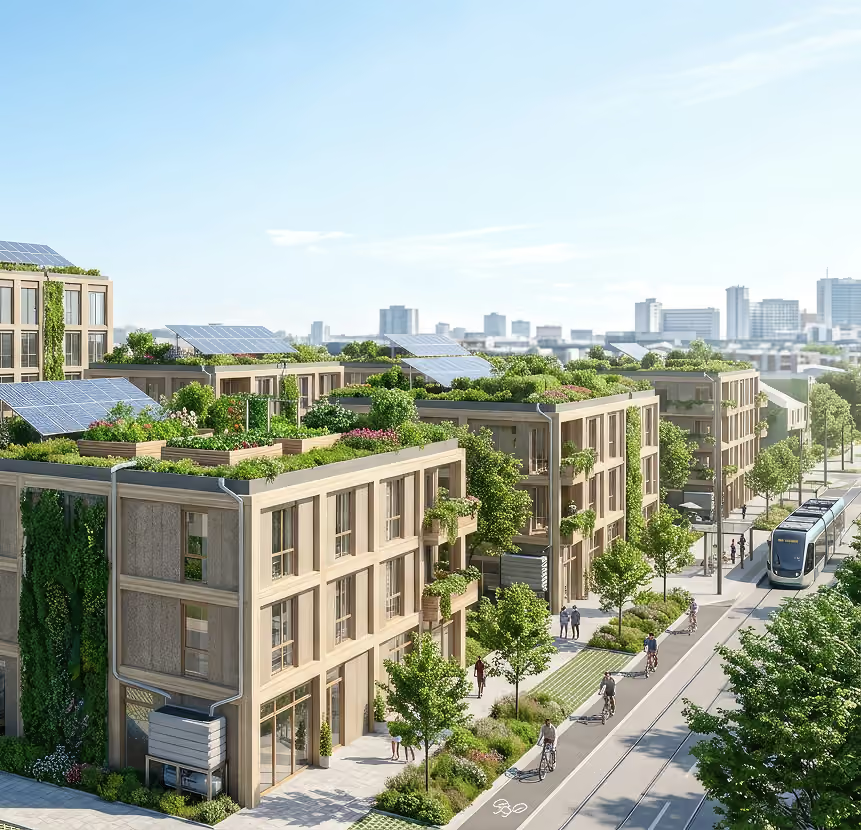
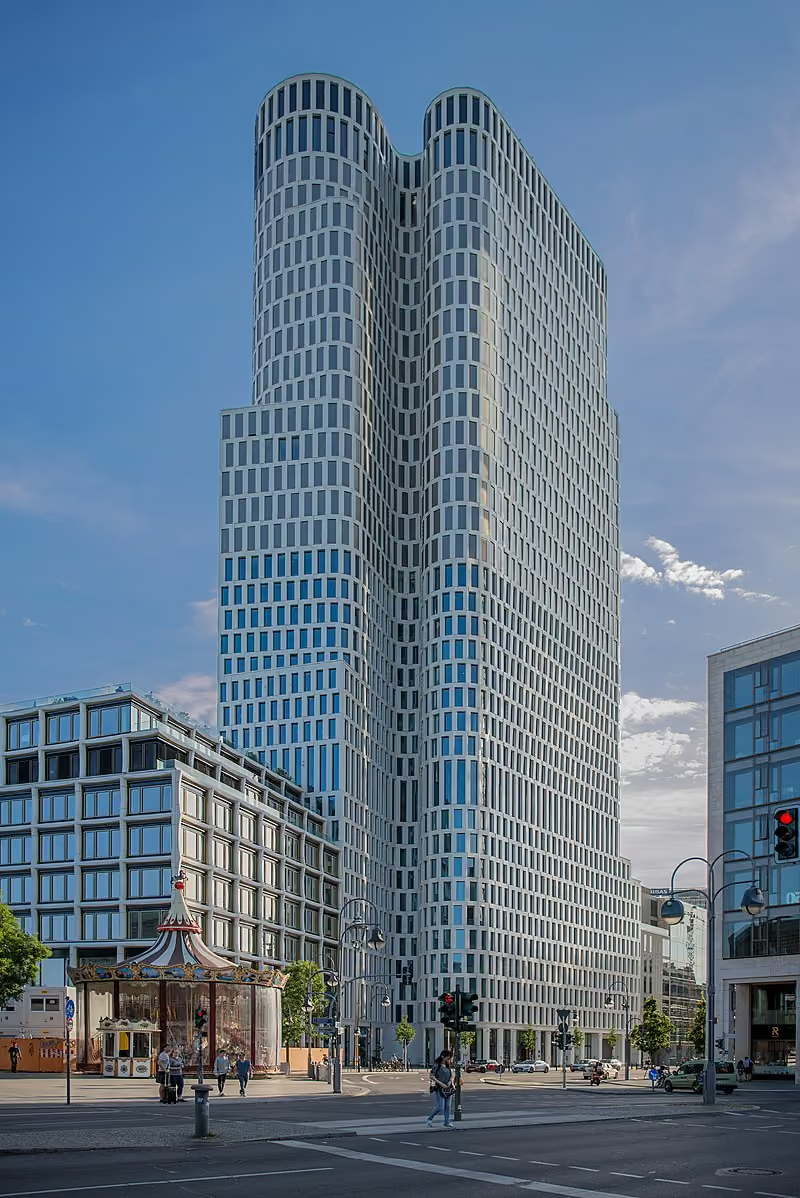
DGNB Biodiversity-promoting outdoor spaces

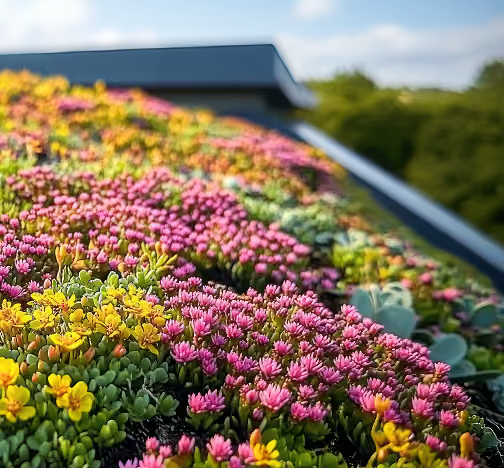
The system evaluates the outdoor spaces of a building or neighborhood and verifies that they truly create viable habitats. For companies subject to reporting requirements, it serves as the verifiable component of a biodiversity strategy.
Request a project check
DGNB Biodiversitätsfördernde Außenräume

The system at a glance

Certifications
Bronze · Silver · Gold · Platinum
Areas of application
Building-related outdoor spaces · Neighborhood-related outdoor spaces
System provider and testing body
System provider: German Sustainable Building Council (DGNB)

Testing body: DGNB conformity assessment
Validity
Initial certificate 1 year · after the first re-certification 2 years · thereafter on a 3-year cycle
Einordnung Biodiversität

Classification

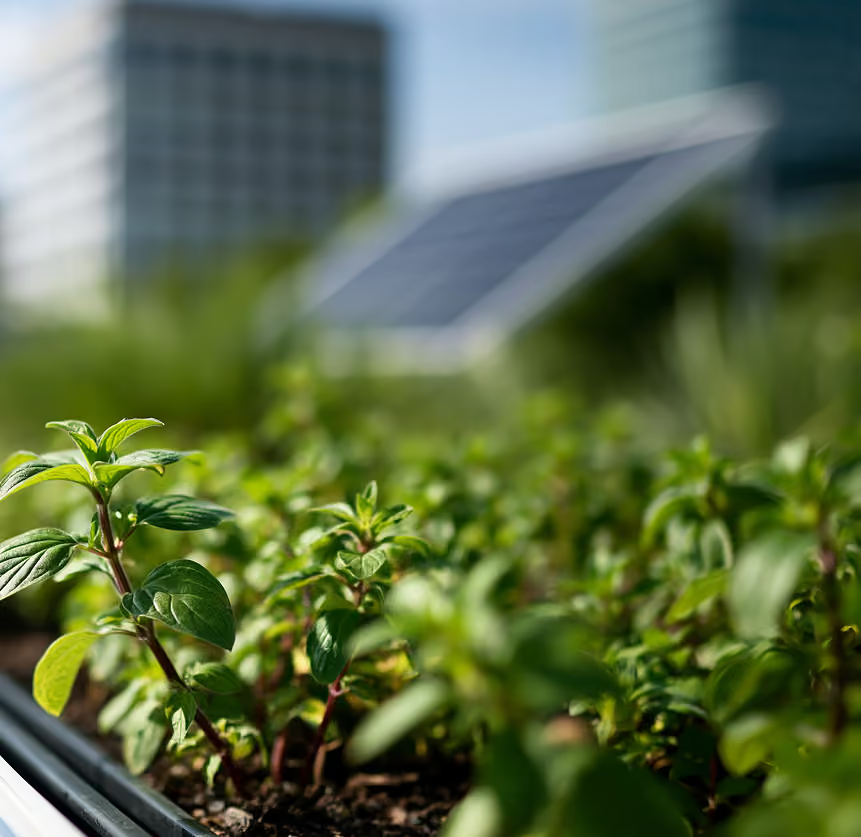
The goal is to promote biodiversity at the site and preserve natural habitats. Criteria assessed include species diversity, the selection and networking of native plant species, the protection of the local water balance, soil functions, connectivity to existing green spaces, the degree of surface sealing, and nature-oriented design.

There are interfaces for the DGNB system for districts, and both processes can be combined.

The benefits cannot be quantified in euros. The pressure comes from reporting.

Reporting obligation under CSRD

The ESRS E4 standard requires disclosures regarding biodiversity. Certification provides verified proof for this rather than a statement of intent. Currently, this affects companies with more than 1,000 employees and an annual turnover exceeding 450 million euros.

EU Taxonomy and GRESB

Both assess biodiversity. For investors subject to these criteria, providing this evidence is part of a competitive product.

Legal framework

The Nature Restoration Law, the EU Biodiversity Strategy for 2030, and the Federal Nature Conservation Act all address the same issues. The work you are doing here contributes to these goals.

Market acceptance

This process is new, but in our experience, it is being very well received by companies subject to reporting requirements, as biodiversity is considered an important stabilizer for climate protection in the medium term.
Wann ein anderes System besser passt Biodiversität

When another system is a better fit

The system is currently in its initial application phase, so it cannot yet be considered a market standard. Anyone currently requiring a widely recognized certificate for an entire building or district will find it in the larger DGNB systems, into which these outdoor spaces can be integrated.

The path to certification

Project check

Phase A, inventory of outdoor spaces

Strategy

Phase B, conceptual design

Measures

Phase C, implementation and support for establishment maintenance

Certificate

Documentation through to conformity assessment, followed by Phase D for operation and maintenance

Duration

Until submission

16 months, if documentation only begins with the intent to certify
upon completion of the outdoor facilities

Until certification after submission

Recertification · after 12 months, then every 3 years

Please submit the documentation for Phase D twelve months after the completion of the outdoor facilities.
 
approx. 4 months

What we handle

Auditing throughout the entire process
Biodiversity studies and concepts
Support for tendering and awarding of growth and maintenance care

We are proud of our clients

Südkreuz Berlin

Berlin
View reference
View reference
ca. 30.000
QM GFA
WELL Platin
System

Lighthouse I Tabakquartier

Am Tabakquartier, Bremen
View reference
View reference
approx. 4,100
QM GFA
DGNB Silver+ QNG Plus
System

Glückaufhaus

Rüttenscheider Str. 2, Essen
View reference
View reference
approx. 21,700
QM GFA
LEED O+M
System

Skyper Frankfurt

Taunusanlage 1 60329 Frankfurt am Main
View reference
View reference
approx. 80,000
QM GFA
LEED v4.1 O+M, ARC Score Version 3.0
System

Kastor

Platz d. Einheit 1, 60327 Frankfurt am Main
View reference
View reference
approx. 29,000
QM GFA
LEED O+M
System

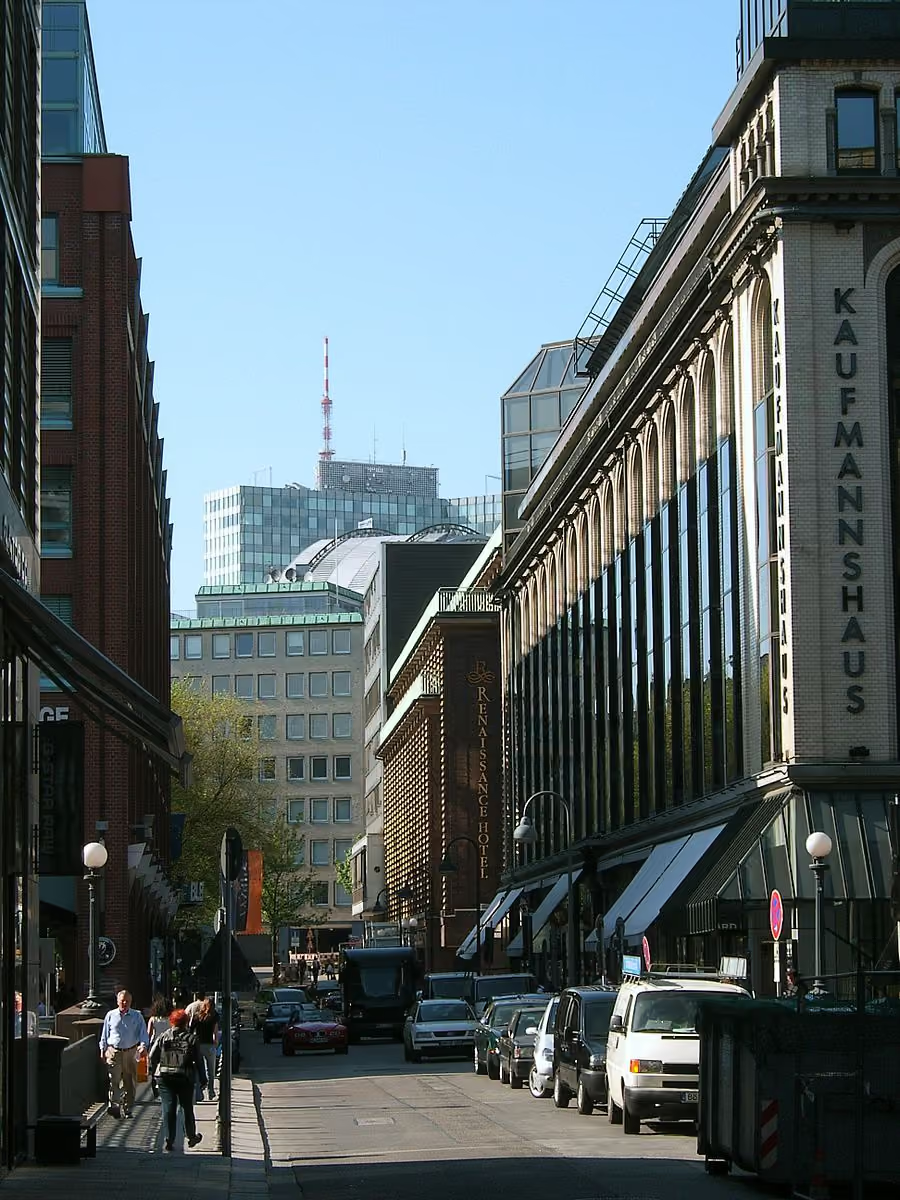
Kaufmannshaus

Bleichenbrücke 10, Hamburg
View reference
View reference
approx. 30,500
QM GFA
LEED O+M
System

Upper West

Kantstrasse 164, Berlin
View reference
View reference
approx. 59,700
QM GFA
LEED O+M
System

Upper Zeil, Frankfurt

Zeil 112-114, Frankfurt
View reference
View reference
approx. 19,000
QM GFA
LEED O+M
System

Frequently Asked Questions

Is the effort comparable to building certification?

No. The number of criteria and the scope of assessment are significantly smaller. The cost of implementation depends on the existing property, regulatory requirements, and the size of the plot.

How do you assess market acceptance?

The process is new and in its initial implementation phase; it is too early to speak of market penetration. In discussions with companies subject to reporting requirements, we are seeing high levels of acceptance, as biodiversity is viewed as a key stabilizer for climate protection in the medium term.

Why is the initial certificate only valid for one year?

Because the quality of outdoor spaces depends significantly on establishment and maintenance care. Without this care, planning and implementation are not sustainable, which is why the system evaluates operations on a recurring basis.