Good Mobility

An assessment and certification system for mobility at your property—covering everything from pedestrian and bicycle access to public transport, sharing services, cars, logistics, and mobility management. As auditors and consultants, we support you throughout the entire process until the certificate is issued.
Request a project check
Good Mobility

The system at a glance

Imprints
Bronze · Silver · Gold · Platinum
Areas of application
New and existing buildings of all types, as well as district developments; particularly suitable for office, commercial, residential, and mixed-use projects
System provider
Good Mobility Standard e.V.
Inspection body
Good Mobility Council (GMC)
Einordnung

Classification

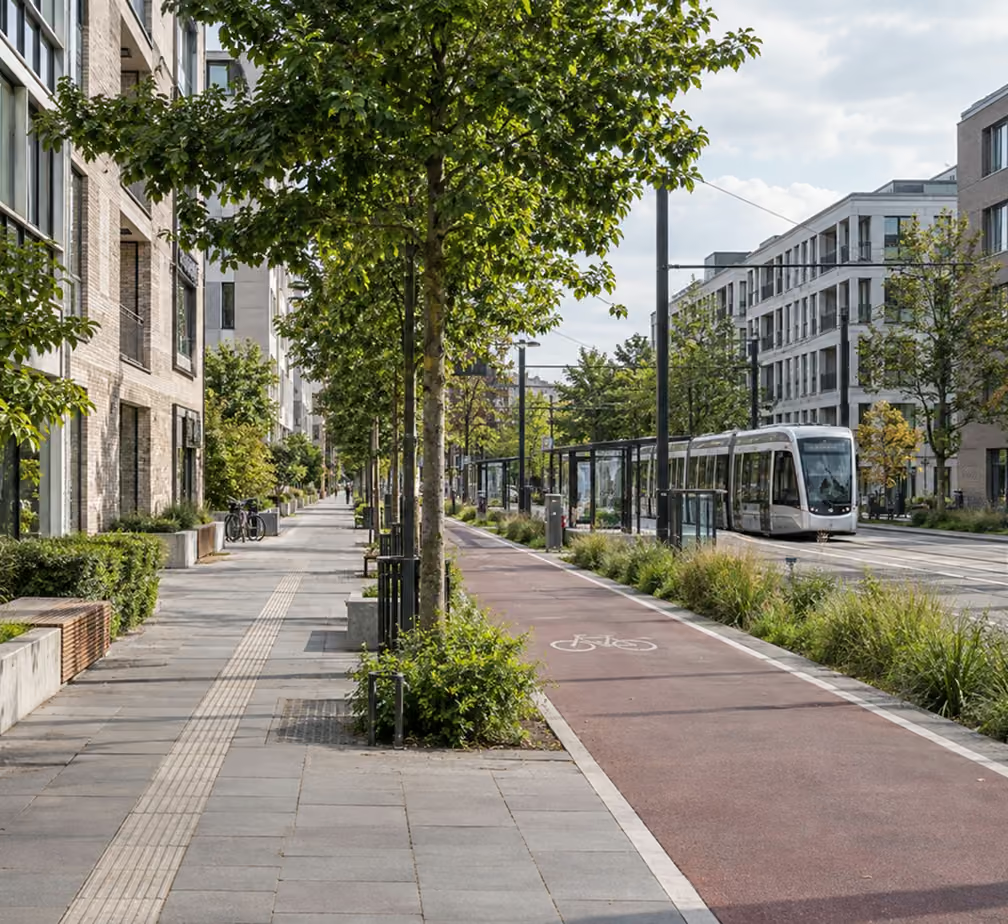
The system evaluates the quality of mobility options at a property or within a district: pedestrian access, cycling, public transport, sharing services, cars, logistics, and mobility management. Assessments are always made in the context of local site and infrastructure conditions, rather than against an abstract ideal.

In practice, this process fills a gap. Planning often ends at the building line or with the bicycle and car parking spaces required by building codes. Issues that go beyond this are often overlooked, even though they significantly influence a property's appeal.

Accessibility is a key factor in whether a space gets leased

It is not possible to reliably quantify a specific effect in euros per square meter for this system. The value lies elsewhere.

Accessibility as a location advantage

The greatest benefits are seen in commercial and office spaces, as good accessibility increases their appeal to customers and employees.

Owner-occupiers of office properties

For corporate real estate, this directly impacts employee satisfaction, employer branding, and corporate culture.

Owners of high-quality properties

In markets with increasing demands for accessibility, the certificate helps differentiate and position high-quality office and mixed-use spaces.

Effort in relation to impact

Unloading and parking zones for food services and cargo bikes, parcel drop-off stations within the building, safe and accessible pathways, and clear, multilingual signage where needed: the implementation effort is low, while the impact on building usage is high.
Wann ein anderes System besser passt

When a different system is a better fit

As a forward-looking process, Good Mobility has already convinced renowned project developers and property owners as early adopters. The system's market presence and reach will continue to grow in the future.

This process is not a holistic sustainability assessment of a property. Banks, tenants, and buyers requiring such assessments rely on DGNB, BREEAM, or LEED systems.

The path to certification

Project check

Assess location and infrastructure conditions, realistically determine classification

Strategy

Prioritize measures, define mobility concept

Measures

Planning support for the implementation of required measures, pathway design, and coordination with providers

Certificate

Documentation and submission for review by the GMC

Duration

Until submission

Submission takes place after the scheduled measures have been implemented. For existing properties, this takes about 6 months; for new construction, up to 3 years.
 
6 months to 3 years

Submission to certification

Review period by the Good Mobility Council.
 
1-2 months

What we handle

Auditing throughout the entire process, supported by four Good Mobility Fellows on the team
Planning support for the implementation of required measures
Concepts for safe and accessible pathways
Coordination with shared mobility providers
Coordination with booking and billing system providers
Coordination of documentation and alignment with the GMC

We are proud of our clients

Südkreuz Berlin

Berlin
View reference
View reference
ca. 30.000
QM GFA
WELL Platin
System

Lighthouse I Tabakquartier

Am Tabakquartier, Bremen
View reference
View reference
approx. 4,100
QM GFA
DGNB Silver+ QNG Plus
System

Glückaufhaus

Rüttenscheider Str. 2, Essen
View reference
View reference
approx. 21,700
QM GFA
LEED O+M
System

Skyper Frankfurt

Taunusanlage 1 60329 Frankfurt am Main
View reference
View reference
approx. 80,000
QM GFA
LEED v4.1 O+M, ARC Score Version 3.0
System

Kastor

Platz d. Einheit 1, 60327 Frankfurt am Main
View reference
View reference
approx. 29,000
QM GFA
LEED O+M
System

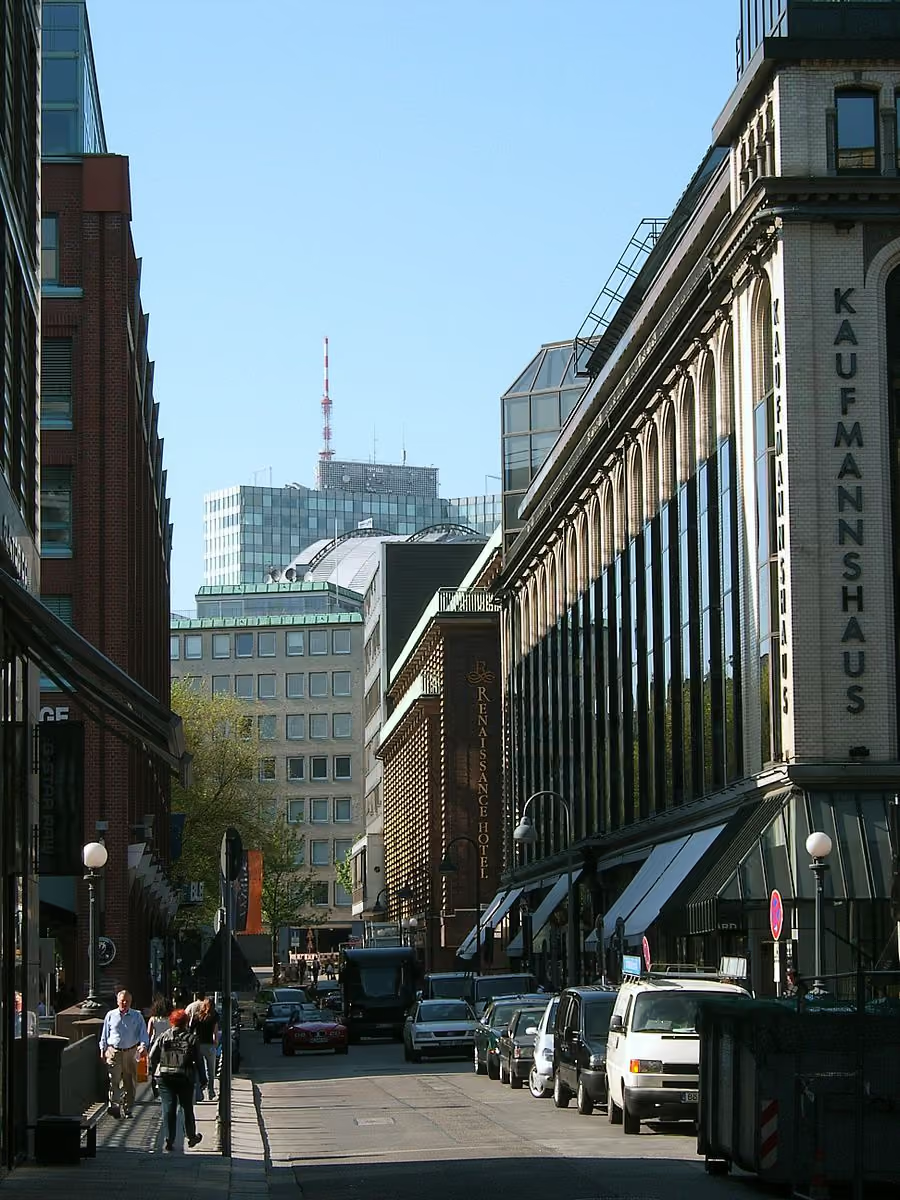
Kaufmannshaus

Bleichenbrücke 10, Hamburg
View reference
View reference
approx. 30,500
QM GFA
LEED O+M
System

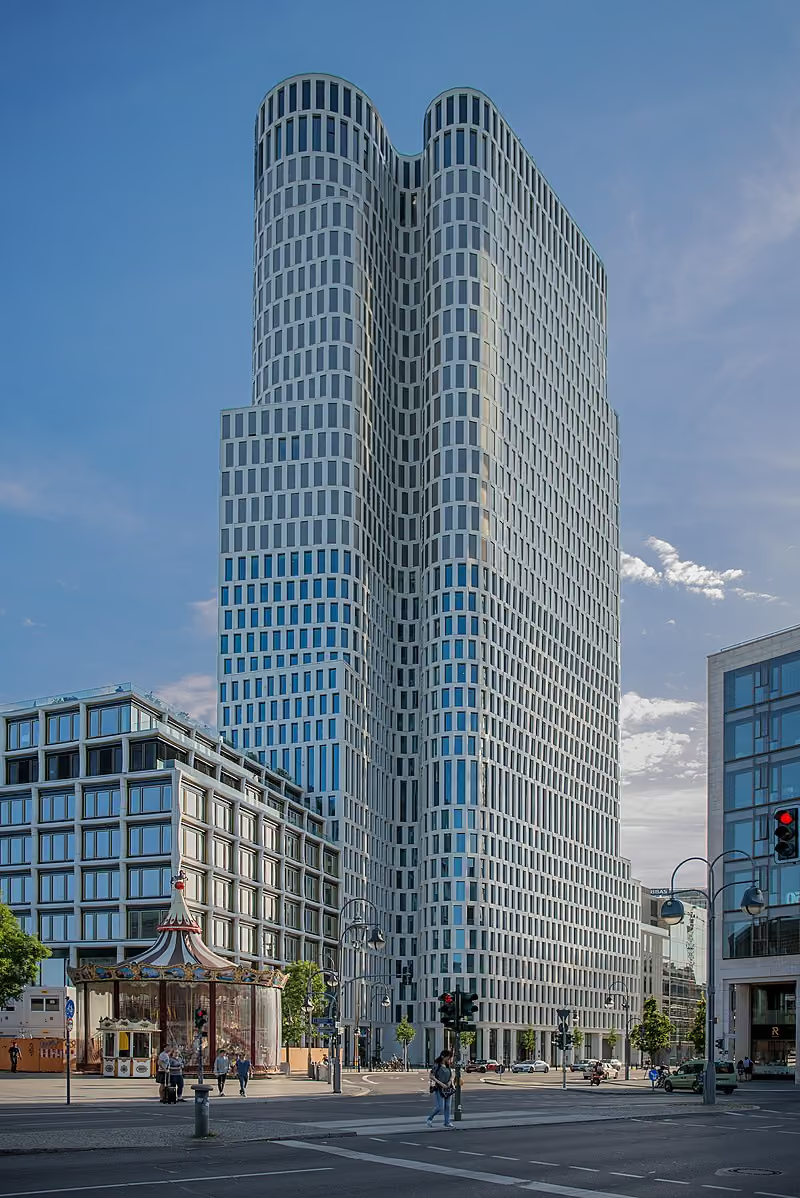
Upper West

Kantstrasse 164, Berlin
View reference
View reference
approx. 59,700
QM GFA
LEED O+M
System

Upper Zeil, Frankfurt

Zeil 112-114, Frankfurt
View reference
View reference
approx. 19,000
QM GFA
LEED O+M
System

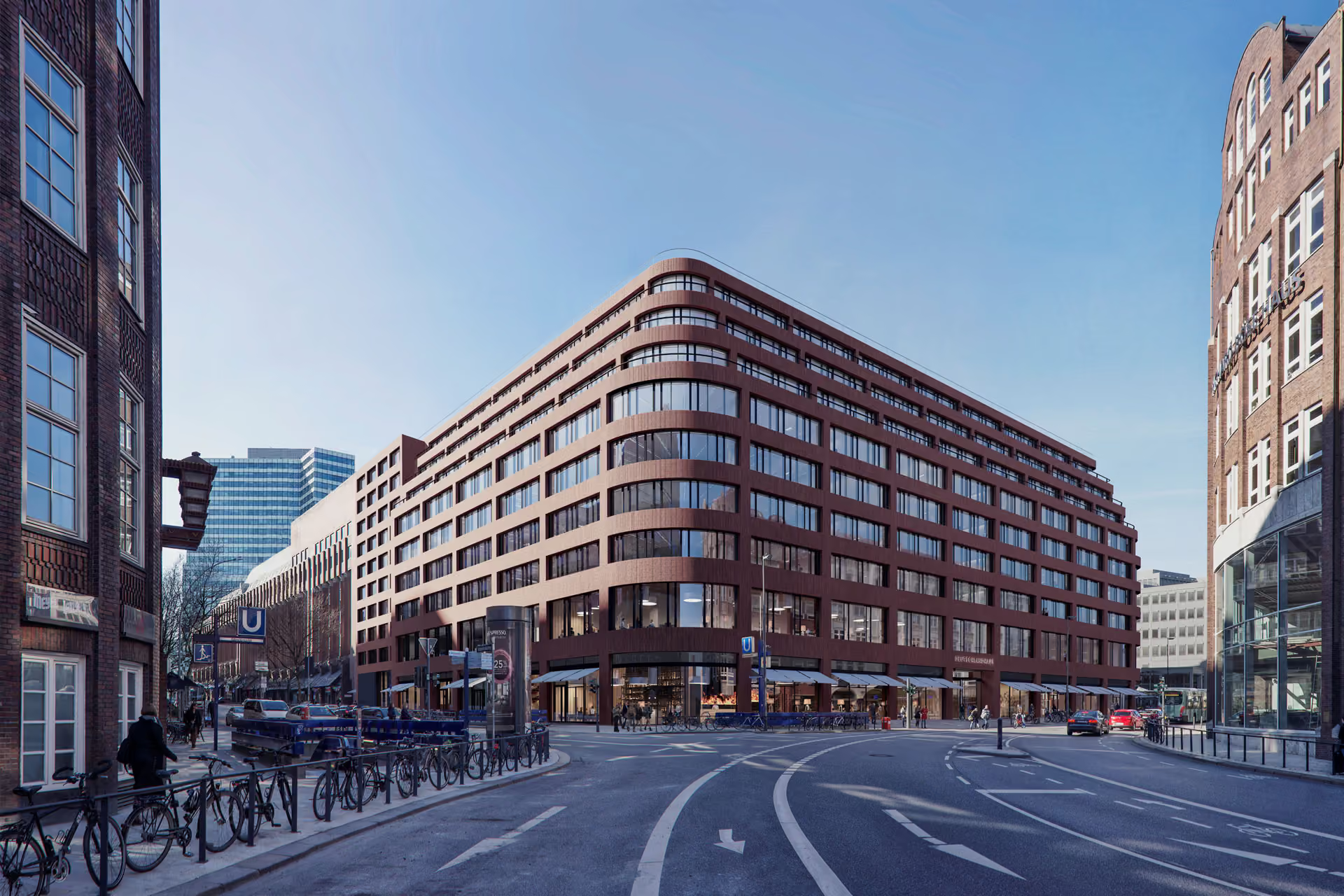
Deutschlandhaus Hamburg

Valentinskamp Hamburg
View reference
View reference
approx. 27,500
QM GFA
LEED BD+C: CS
System

SAP Potsdam

Nedlitzer Straße, Potsdam
View reference
View reference
approx. 57,500
QM GFA
LEED NC v2009
System

Enerparc Hamburg

HafenCity (Kirchenpauerstraße 26)
View reference
View reference
9,575.96
QM GFA
HafenCity Ecolabel, version 3.0
System

Opus 84 Hamburg

Baakenhafen District BF 84 Hamburg
View reference
View reference
approx. 27,500
QM GFA
HafenCity Eco-Label, version 3.0
System

Ipanema Hamburg

Überseering Hamburg
View reference
View reference
approx. 21,000
QM GFA
DGNB NBV15
System

Fuhle 101 Hamburg

Fuhlsbüttler Straße Hamburg
View reference
View reference
approx. 28,600
QM GFA
DGNB MIX15
System

Infinity Office Düsseldorf

Schwannstraße Düsseldorf
View reference
View reference
approx. 23,000
QM GFA
DGNB NBV15.2
System

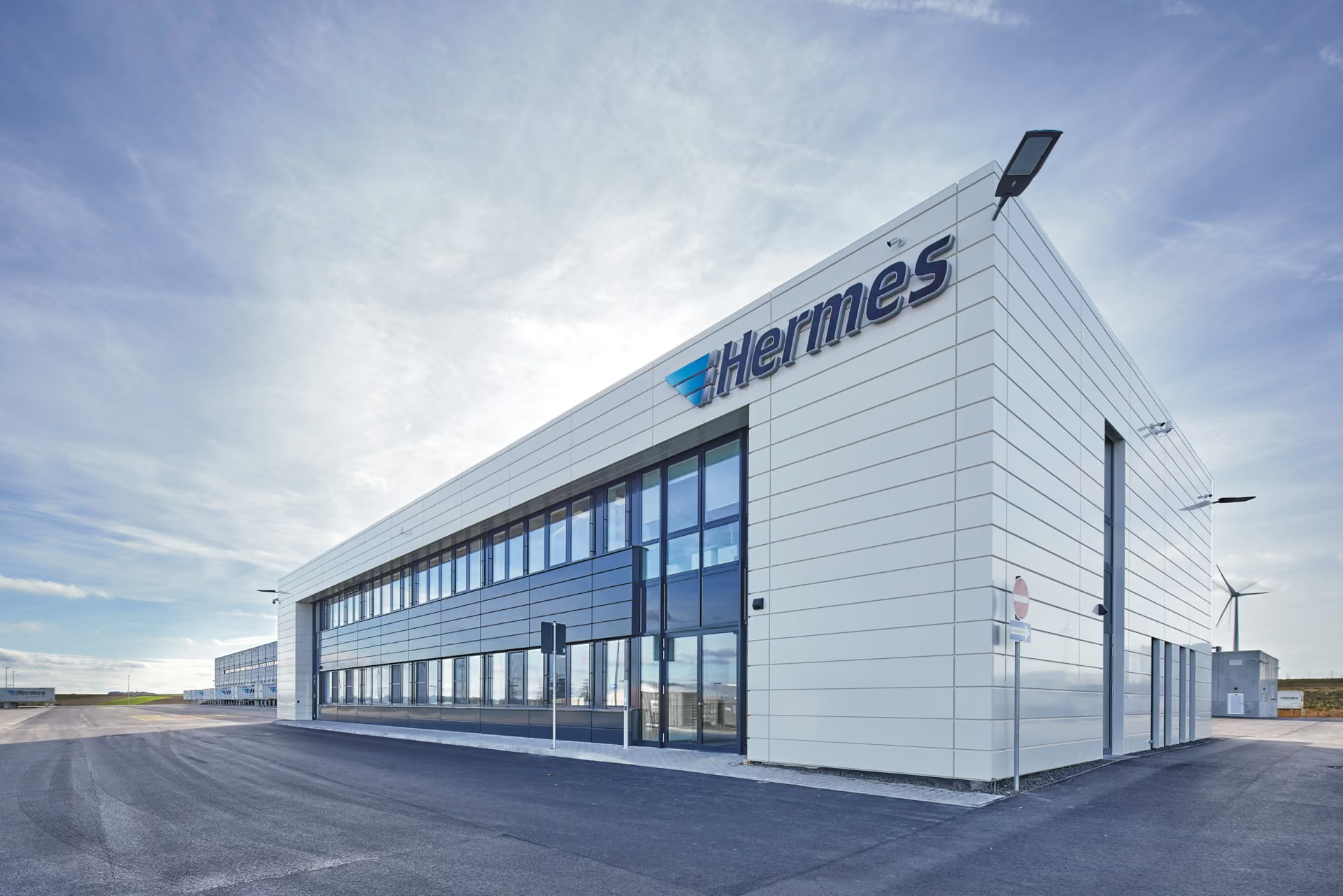
Hermes Bluefield

Heilbronn, Mainz, Augsburg, Berlin-Southwest, Halle, Hamburg, Münster, Osnabrück
View reference
View reference
approx. 10,700 / 12,700
QM GFA
DGNB NLO15
System

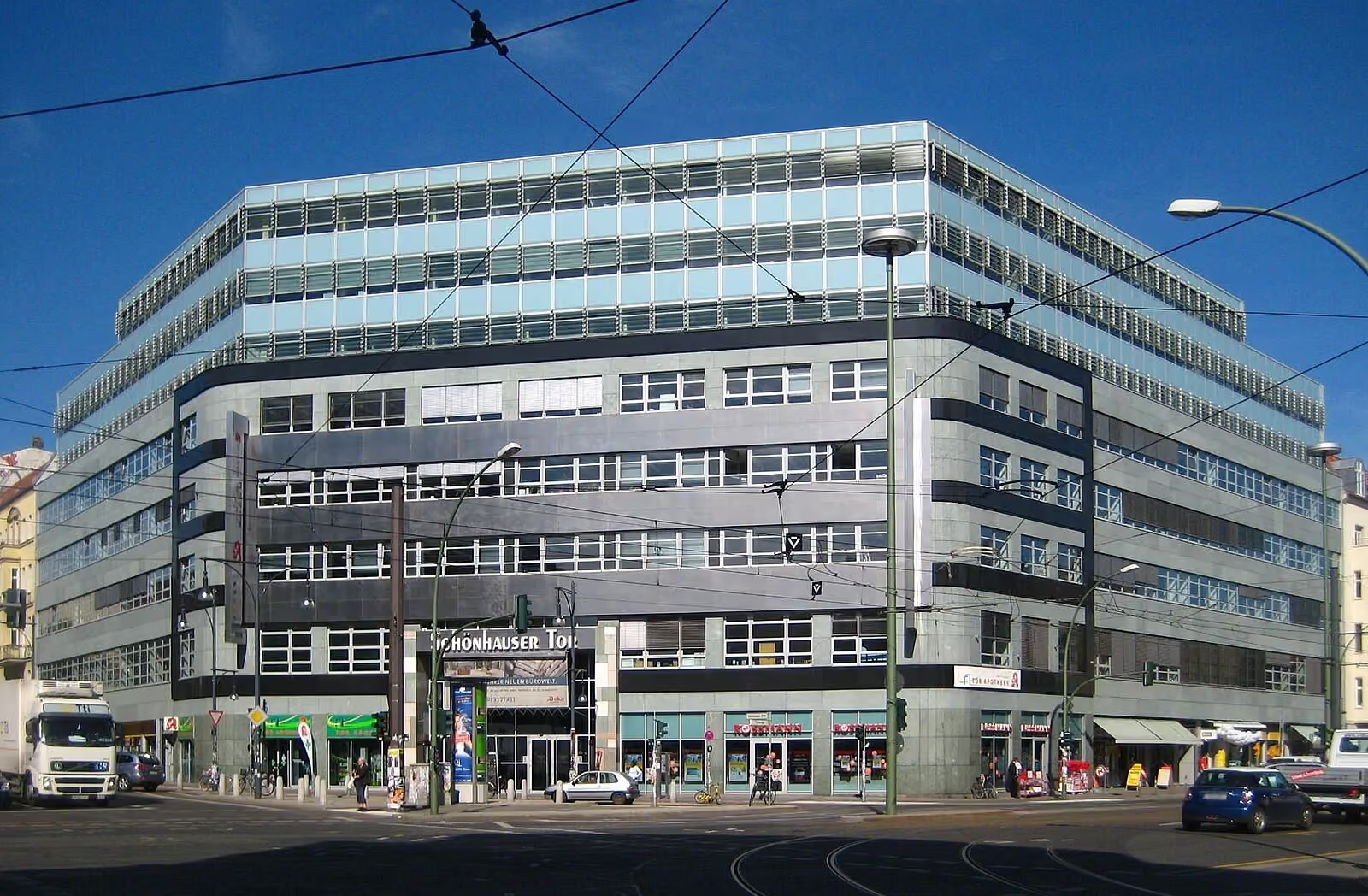
Schönhauser Tor, Berlin

Torstraße 49, Berlin
View reference
View reference
approx. 18,800
QM GFA
BREEAM In-Use
System

PEER I Tabakquartier

Am Tabakquartier, Bremen
View reference
View reference
approx. 2070
QM GFA
DGNB Silver + QNG Plus
System

LUX I Tabakquartier

Am Tabakquartier, Bremen
View reference
View reference
approx. 2,070
QM GFA
DGNB Silver QNG Plus
System

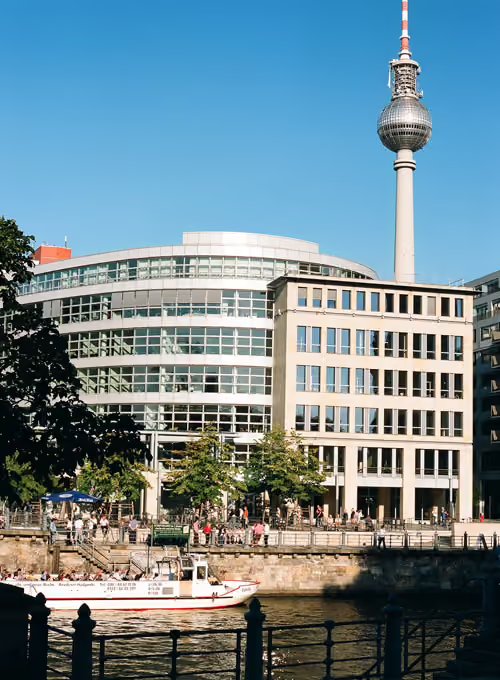
Spreepalais am Dom, Berlin

Anna-Louisa-Karsch-Strasse 2, Berlin
View reference
View reference
approx. 25,000
QM GFA
BREEAM In-Use
System

ALVA I Tabakquartier

Am Tabakquartier, Bremen
View reference
View reference
approx. 2,900
QM GFA
DGNB New Construction + QNG
System

Tabakquartier

Am Tabakquartier, Bremen
View reference
View reference
approx. 193,000
QM GFA
DGNB Silver + QNG Plus
System

W2 Campus

Schockenriedstraße 39A-C, 70565 Stuttgart
View reference
View reference
BS 1+2: approx. 28,000, BS3: approx. 17,400, BS4: approx. 23,700
QM GFA
LEED Platinum
System

SUN Munich

Munich
View reference
View reference
31,905
QM GFA
DGNB New Construction
System

DMK Airport City Bremen

Bremen
View reference
View reference
approx. 21,533
QM GFA
DGNB New Construction
System

Seestern

Am Seestern 1, Düsseldorf
View reference
View reference
approx. 69,800
QM GFA
BREEAM In-Use
System

Frequently Asked Questions

Has the system already established itself on the market?

It is a relatively new process. However, since the first users are renowned project developers and property owners, we expect it to become more widespread.

Do we need to bring in additional experts?

No. Planning support and documentation are handled by so-called Good Mobility Fellows. Four employees at ibak Hamburg hold this qualification.

What do you see as the biggest advantage?

In practice, these issues usually stop at the building line or with the parking spaces required by planning law. Softer factors that are essential to a property's appeal are rarely prioritized: loading and parking zones for food delivery services using cargo bikes and electric vehicles, parcel drop-off stations within the building, safe and accessible pathways, and attractive, multilingual signage where needed. The implementation effort is low, but the impact on usability is high.