The most expensive mistakes in buildings are often made long before construction begins
When users later complain about overheated offices, glare at their workstations, or a lack of comfort, the cause rarely lies in building operations. Often, critical decisions were made during the planning phase without fully understanding their actual impact.
At the same time, requirements are increasing. Buildings need to be energy-efficient, economical, and future-proof. Regulatory energy performance certificates provide an indication, but they do not offer reliable data on actual energy consumption. This is not a fault of the creator, but of the methodology. However, building designs must account for climate risks, meet ESG criteria, and provide a high-quality working environment for years to come. As complexity grows, reliable decision-making becomes critical to success. Energy simulations make a decisive contribution to this.
Why experience alone is no longer enough
Buildings today are designed for a service life of several decades. During this time, not only do requirements and usage concepts change, but so do climatic conditions. What works under today’s weather conditions may reach its limits in ten or twenty years. At the same time, many questions can only be answered by examining the interplay between the building envelope, usage, solar radiation, and technical systems.
Simulations help make these relationships visible. They do not replace the experience of planners, but they do expand the basis for decision-making with reliable data.
For me, the most exciting question is not whether a building meets a specific requirement. It is more exciting to know whether people will still enjoy living or working there in ten or twenty years. That is exactly what simulations help determine.
A practical example from Offenbach
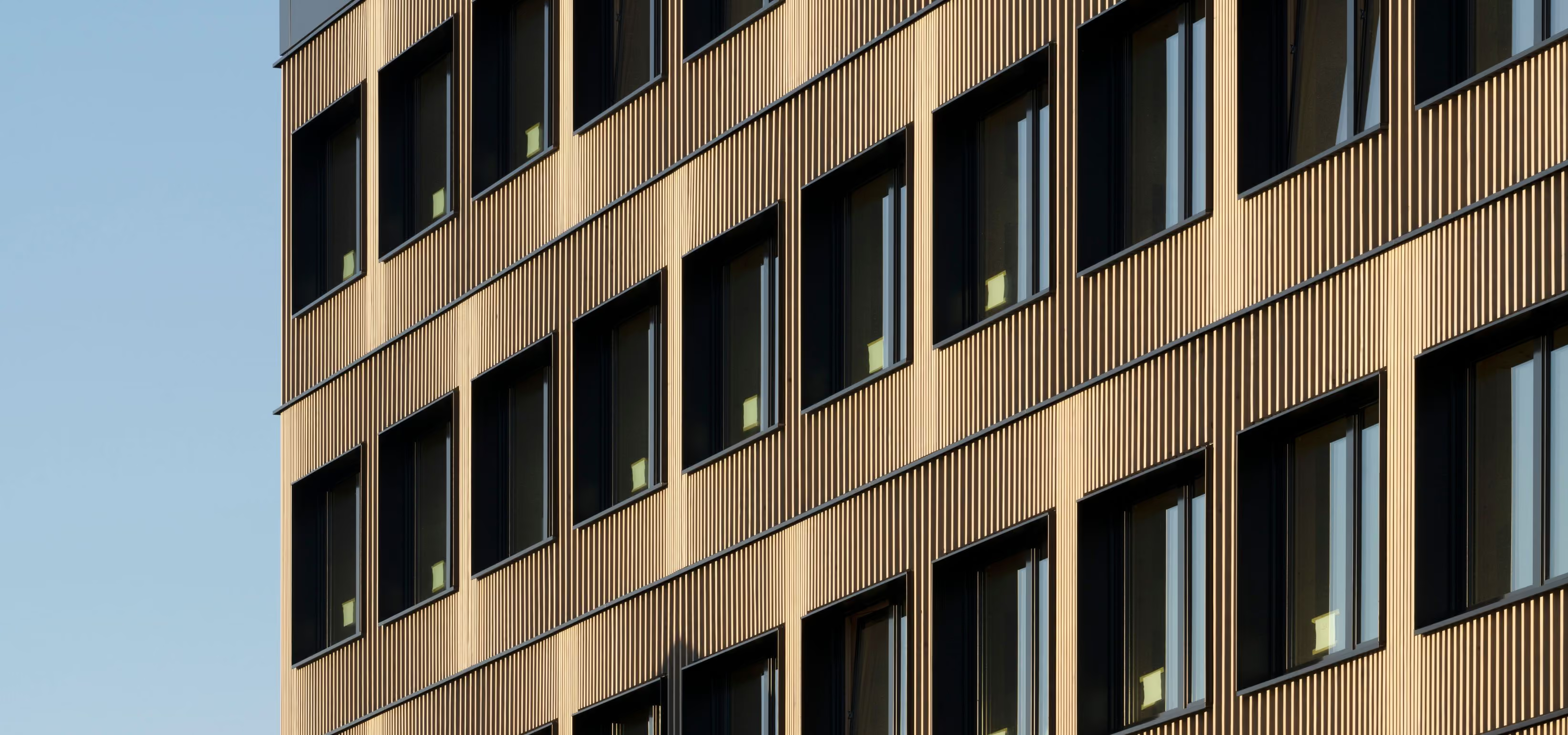
For the ROCKYWOOD project in Offenbach am Main, ibak Hamburg supported the DGNB certification of a mixed-use commercial and office building. The project achieved DGNB Gold certification under the assessment system for office and administrative buildings. A key component of the certification was the verification of thermal and visual comfort. The goal was not only to check requirements for the current planning stage but also to understand how the building behaves under various conditions.
The study examined factors such as temperature profiles, daylight availability, and workstation quality in terms of visual comfort. Additionally, climate scenarios for the years 2030 and 2050 were analyzed to assess the building's future-readiness.
.avif)
Focusing on critical areas with clear insights
While analyzing average building areas was standard, the real challenge was focusing on the most critical usage situations. The analyses specifically targeted so-called worst-case scenarios. This included rooms with different orientations as well as areas with unfavorable conditions regarding solar radiation and daylight exposure.
The investigations confirmed that the requirements for thermal and visual comfort are met not only under typical usage conditions but also in these critical areas. Furthermore, the simulations confirmed the robustness of the design under the climate scenarios considered for 2030 and 2050. Specifically, it was confirmed that
- all simulated rooms maintain a comfortable indoor climate.
- there is abundant daylight available, which supports efficient and productive work in the office spaces and ensures a positive working atmosphere.
What thermal simulations actually achieve
The value of such analyses lies not in the volume of data generated, but in the decisions that can be derived from it. The simulations show
- where overheating risks might arise,
- how effective shading concepts actually are,
- whether sufficient daylight reaches the relevant areas of use
- and what impact design adjustments have in the early stages.
This forward-looking perspective is becoming increasingly important, especially in times of rising temperatures. According to the German Meteorological Service, the past few years in Germany have been among the warmest since systematic weather records began. Buildings are designed today but will be used in the climate of the coming decades. It is therefore essential to consider future developments during the early planning phases.
From analysis to decision
A good simulation is only as valuable as its clarity. That is why the results in the ROCKYWOOD project were presented in a way that allowed stakeholders to understand the impact of various assumptions and constraints. The goal was not to generate as many metrics as possible, but to support informed decision-making. The result was a reliable basis for verifying thermal and visual comfort and, ultimately, for achieving successful DGNB Gold certification.
However, the real benefit was realized much earlier in the project. Simulations do not create sustainability; they create transparency, which is often the prerequisite for making the right decisions at the right time.